

Advocates for Autism of Massachusetts (AFAM)
A Powerful Legacy:
For two decades, Advocates for Autism of Massachusetts (AFAM) has been a fierce public voice and a powerhouse of legislative change. Established in 2004, AFAM has grown over the years and its membership has always included the leading autism advocacy or service organizations in Massachusetts. AFAM’s history has been inextricably linked with The Arc of Massachusetts, operating as its dedicated division to mobilize and advocate for individuals with autism, their families, and professionals who provide essential supports and services.
AFAM’s work, led by its original Chairman Michael Borr and in partnership with The Arc of Massachusetts, has resulted in landmark legislation that has genuinely transformed lives across the state. This crucial work focused on securing essential funding and policy changes and ensuring robust service delivery.

Examples of AFAM’s advocacy efforts include:
- An Act Relative to Insurance Coverage for Autism (ARICA) – 2010: This was a hard-fought, landmark victory that requires private health insurers in Massachusetts to cover the diagnosis and medically necessary treatment of autism spectrum disorder (ASD). It critically secured coverage for Applied Behavior Analysis (ABA), establishing Massachusetts as the state with one of the most comprehensive coverage mandates in the nation.
- The Autism Omnibus Bill – 2014: This comprehensive law solidified lifelong supports by achieving three major goals:
- Expanded Eligibility: It mandated that the Department of Developmental Services (DDS) expand adult eligibility to include people with autism without an intellectual disability.
- MassHealth Coverage: It required MassHealth (Medicaid) to cover medically necessary treatments for children with ASD, including ABA therapy.
- Permanent Commission: It established the Governor’s Autism Commission as a permanent entity.
- AFAM continues to be a strong partner in The Arc’s legislative advocacy wins. They worked diligently to advocate for increases in Chapter 257, the passage of Nicky’s law, police training, and more.
Coalition Power and A Seat at the Table
AFAM has been instrumental in building a broad coalition by uniting diverse organizational representation to create a unified force that successfully moved critical legislation through the State House.
Through its persistent and influential presence on the Governor’s Autism Commission and its subcommittees, AFAM ensures that the lived experiences and urgent priorities of people with autism are prioritized with Massachusetts lawmakers and state agencies. This commitment empowers families to become effective advocates for their fundamental needs.
Member Organizations and Representatives











Michael Borr
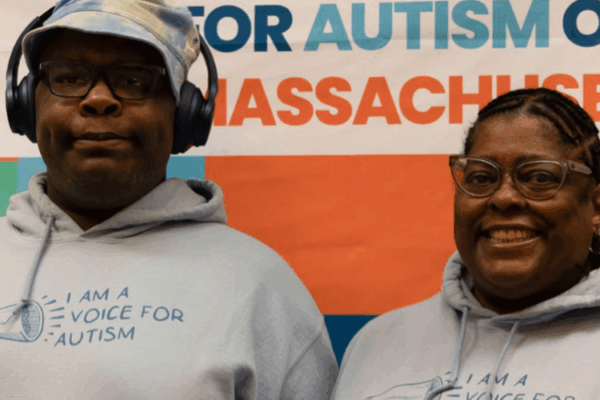
Gyasi Burks-Abbott
Gloria Castillo
Jonathan Gardner
Christine Hubbard
Ilyse Levine-Kanji
Kathleen Moline
Justine Neely
Lisa Marie Noke-Kearney
A Stronger Future: AFAM’s Legacy Continues
This history is not ending; it is evolving. The decision to formally merge AFAM into The Arc of Massachusetts is a strategic move to create a unified, stronger force for advocacy across the Commonwealth. AFAM’s 20-year legacy will now be fully integrated and celebrated here at The Arc of Massachusetts. We are stronger than ever, together.
This new structure is designed to leverage combined resources, maximize legislative influence, and ensure that the groundbreaking advocacy for the autism community – including the fight for ABA coverage, access to inclusive healthcare, training of our first responders, and the quality and expansion of adult services – remains a central, driving force in The Arc’s mission.
2025-2026 Priority Bills
Advocates for Autism of Massachusetts, a division of The Arc of Massachusetts, sets its priorities for each legislative session in coordination with The Arc. You can see the full list of our legislative priorities here.
-
Workforce Incentives
- Summary: This bill requires that Chapter 257 rates that fund direct care staff and direct support professionals’ salaries be consistent with the Bureau of Labor Statistics 75th percentile. This would, over time, increase wages for those providing these critical services.
-
Family Members as Paid Caregivers
- Summary: This bill allows guardians, caregivers, and others with legal standing to be paid for providing Adult Family/Foster Care (AFC) and Personal Care Attendants (PCA) services.
-
Blue Envelope
- Summary: This bill aims to facilitate understanding and communication between law enforcement and individuals with autism. It would allow drivers or vehicle passengers who are diagnosed with autism spectrum disorder (ASD) to voluntarily request a blue envelope that contains important information to assist in the event of a traffic stop.
-
Police Training
-
Summary: This bill requires in-service training for law enforcement officers and corrections officers focused on appropriate interactions with people with autism and IDD. The bill also ensures guidelines for law enforcement responses to individuals with autism or IDD who are victims of or witnesses to crimes.
-
-
Nicky’s Law Expansion
- Summary: Expands the protections of Nicky’s Law/Dana’s Law to those receiving services in MassHealth Day Habilitation programs. These providers would be required to use the abuse registry before making hiring decisions, ensuring that participants are safe from harm. Also includes language to streamline the effectiveness of the Disabled Persons Protection Commission.
-
MassHealth ABA Coverage
- Summary: This bill will require MassHealth to cover medically-essential treatments, including Applied Behavior Analysis (ABA) services, for adults over the age of 21 with a developmental disability, intellectual disability, or autism. The bill also improves access to augmentative and alternative communication (AAC) coverage.
-
Healthcare Standards
-
Summary: This bill would develop training opportunities for medical providers to improve their ability to diagnosis, treat, and care for patients with autism and IDD.
-
-
Transitional Planning and Accountability
- Summary: Requires transition plans to be developed at least one year before an individual’s transition to adult services, allowing more time for individuals and families to work with the Department of Developmental Services (DDS) to plan and prepare. Creates a commission to study gaps in the system and opportunities to improve the turning 22 process for all.
-
IEP Interpreters
-
Summary: Requires the Department of Elementary and Secondary Education (DESE) to create standards for the training, hiring, and use of interpreters in school settings. This is particularly important in IEP meetings, to ensure that parents and students with limited English proficiency can fully participate.
-
-
Education Protections
-
Summary: Given the current federal landscape, many education rights are at risk for students with disabilities and immigrant students. This bill would preserve key protections in education and legally affirm Massachusetts’s commitment to equity.
-
-
AAC Devices
-
Summary: This bill requires the Board of Elementary and Secondary Education to ensure that teachers are trained in ensuring the effective use of augmentative and alternative communication (AAC) devices.
-
Annual Autism Advocacy Day
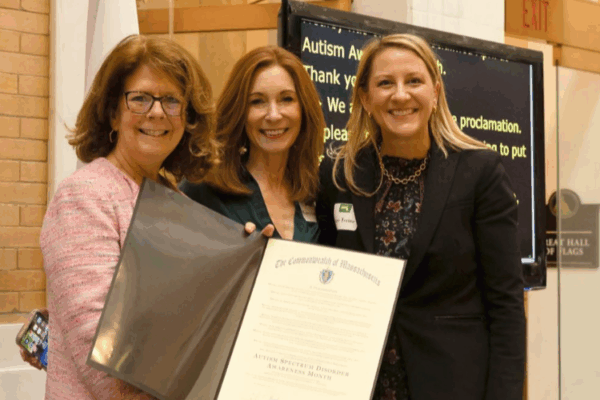
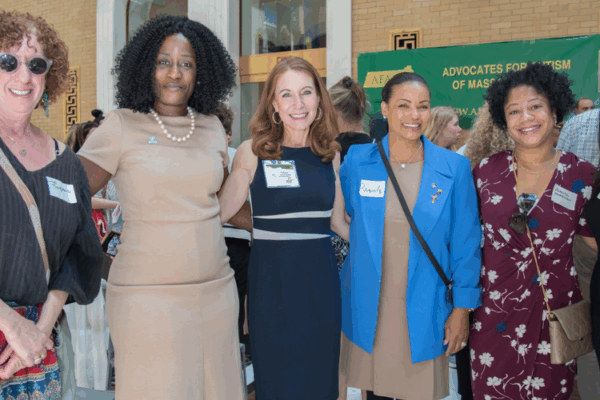
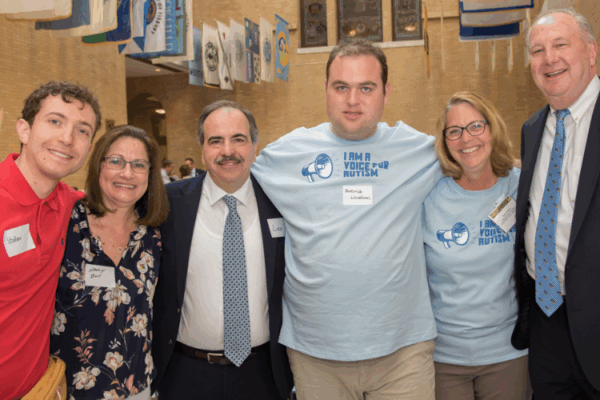
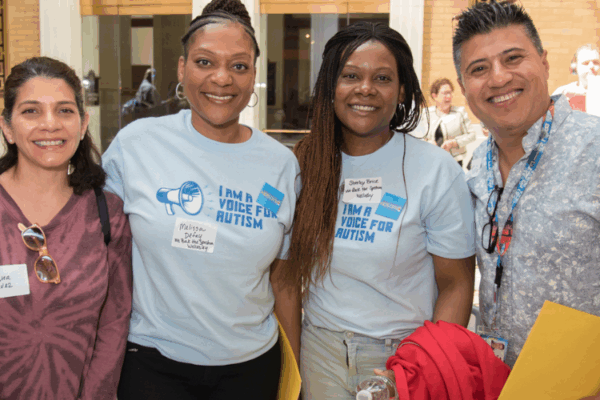
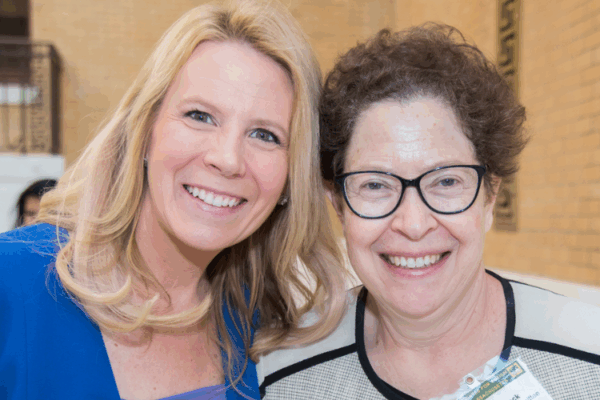
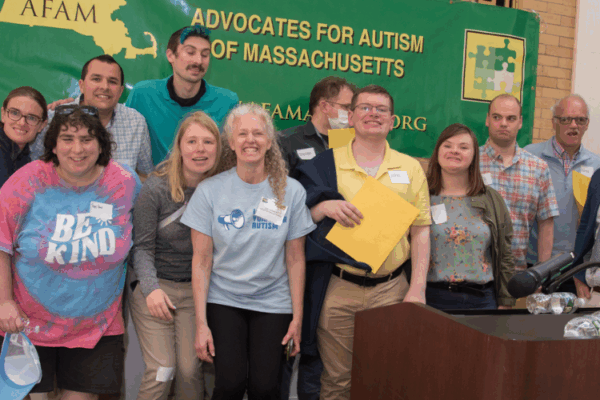
On Wednesday, April 8, more than 400 advocates, families, legislators, staff, and officials gathered at the Massachusetts State House for the 21st Annual Autism Advocacy Day. This year’s theme was “Safeguarding Our Future: Defending Critical Services for the Autism Community.”
The event featured powerful remarks from Executive Office of Health and Human Services (EOHHS) Secretary Dr. Kiame Mahaniah, who presented Governor Maura Healey’s proclamation of April as Autism Awareness Month in Massachusetts. Ashley and Alden Waring spoke about transition planning, while Gyasi Burks-Abbott highlighted the importance of services and supports.
We were also proud to honor our legislative champions Senator Paul Feeney and Senator Vanna Howard as Distinguished Legislators of the Year and Jeremy Spittle as our first-ever Distinguished Staff Champion. Their leadership and commitment to the autism community are truly inspirational.



Get the latest news directly to your inbox
Sign up for the latest news, events, and ways you can get involved with The Arc.
By submitting your email you agree to The Arc terms.