

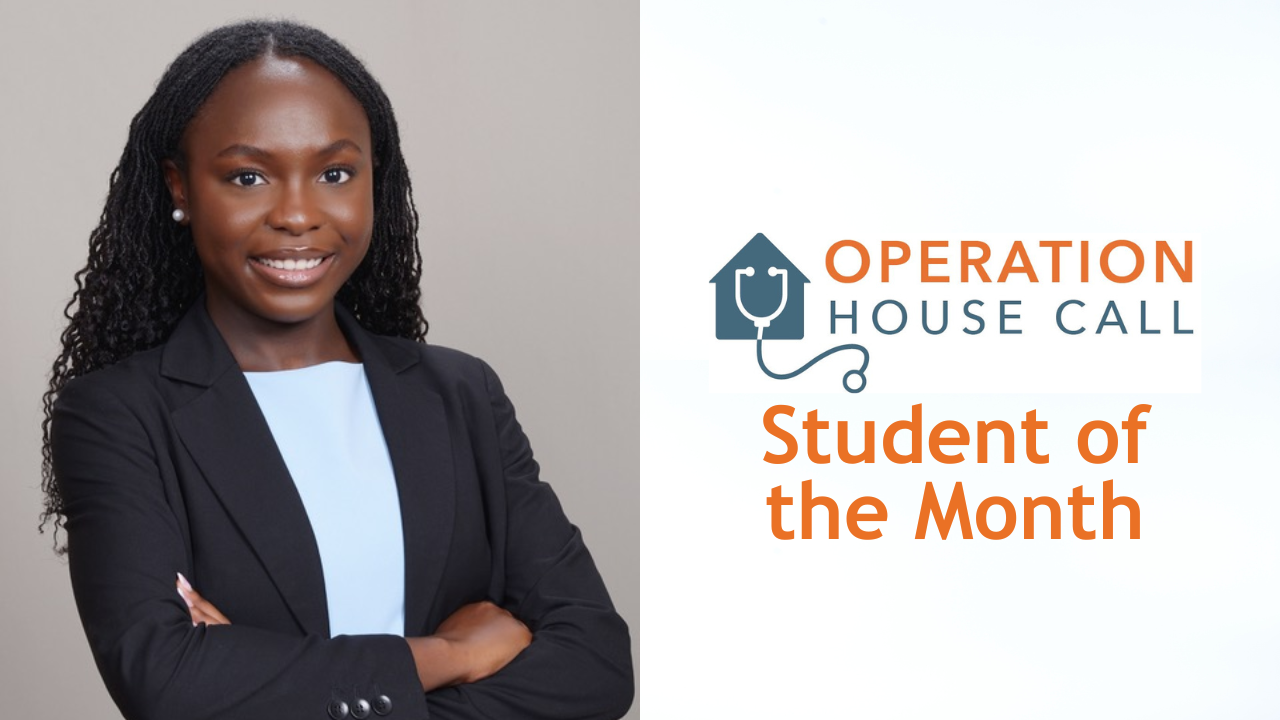
 In this series, The Arc of Massachusetts will be spotlighting Operation House Call Students of the Month. Each month, we will be profiling one student who has taken part in OHC and shared the impact that the program has had on them.
My home visit with [the home visit host family] was one of the most meaningful learning experiences I have had in medical school so far. Going into the visit, I expected to learn more about caring for patients with intellectual and developmental disabilities, but I left with something much deeper: a more human understanding of personhood, autonomy, family advocacy, and what it really means to provide respectful, patient-centered care.
One of the first things that struck me was how full, active, and joyful S’s life is. She shared with us an impressive schedule filled with bowling, Best Buddies, Special Olympics, fitness, basketball, swimming, travel, bracelet-making, and soon, work as a patient actor for UMass. Listening to her describe her life reminded me how harmful it can be when healthcare providers reduce patients with disabilities to a diagnosis. S is not simply a patient with Down syndrome. She is funny, disciplined, social, expressive, ambitious, and deeply aware of who she is. She has preferences, goals, anxieties, routines, and strong opinions. This seems obvious, but I think medicine can sometimes fail people when it forgets that individuality must come before diagnosis.
One of the most impactful parts of the visit was hearing S and her parents describe what respectful communication looks like in clinical settings. S said clearly that she wants more communication directed toward her, and that if she does not understand something, then she will turn to her mother for help. Her mother reinforced how important it is when providers acknowledge S first, speak to her directly, and then ask permission before involving a parent more heavily in the conversation. That distinction stayed with me. It highlighted that inclusion is not just about being physically present in the room; it is about being recognized as the central person in one’s own care.
This will absolutely shape the kind of practitioner I want to be. In the future, when caring for patients with intellectual or developmental disabilities, I want to be intentional about addressing the patient first, assessing their preferred communication style, and not making assumptions about what they do or do not understand. The visit reminded me that comprehension exists on a spectrum, and that even when verbal expression is limited, that does not mean a person is not perceiving, feeling, or understanding much more than others realize. I was especially struck by her mother’s advice to “acknowledge the individual first” and to “feel it out” while also reading cues from family members or caregivers. That felt both practical and deeply respectful.
Another major lesson from this visit was the importance of listening — truly listening. [The family] repeatedly emphasized that the best healthcare experiences they had were with providers who took time, showed genuine care, and did not rush through appointments. They described a physician whose empathy and presence left a lasting impact on them, not because of any extraordinary procedure, but because he made them feel heard, valued, and supported. That reminded me that good care is not only about clinical competence. It is also about attention, patience, and human connection. Especially for families navigating complex systems, multiple specialists, guardianship processes, transitions out of pediatric care, and community resources, being heard is not a luxury. It is essential.
I also learned a lot from the family’s discussion about advocacy and systems navigation. Their story showed how much effort families often invest behind the scenes: coordinating appointments, finding community programs, arranging transportation, navigating legal processes like guardianship, and ensuring continuity across specialties. I was reminded that health does not exist only in the exam room. It is shaped by access, structure, social support, and the ability of systems to communicate with one another. Their positive experience with coordinated care illustrated how valuable integrated systems can be, especially for patients with complex needs. As a future physician, this challenges me to think beyond isolated visits and consider how fragmented care can place unnecessary burdens on patients and families.
At the same time, I was moved by the strength and intentionality of the family. They did not define her by limitation. They held high expectations, encouraged independence, and treated her with dignity. It was clear that this shaped S’s confidence and voice. I appreciated how they spoke honestly about the tension between providing support and fostering autonomy. That balance is something I know I will need to navigate carefully with future patients and families. This visit reminded me that family members often carry expertise that is not written anywhere in the chart. They know what helps, what harms, what motivates, and what makes their loved one feel safe. That kind of knowledge should be welcomed, not sidelined.
Overall, this home visit expanded my understanding of what it means to care well for patients with different needs. It taught me that the best care begins with humility: asking, listening, noticing, and being willing to adapt. It reinforced that disability does not erase individuality, that autonomy should be supported rather than assumed away, and that families are often indispensable partners in care. Most importantly, it reminded me that every patient wants what all of us want: to be seen, respected, heard, and cared for as a whole person.