

By Rachel Hayward, Director of Pathways to Friendship
Like many children, I always wanted a dog; but due to our family’s busy schedule and my parent’s lack of desire to take on more responsibilities than us four kids, I never got my wish. As I grew, my interest in animals waned. There was no ill will, but I couldn’t comprehend the fuss or the endless desire of pet owners to share pictures of their “fur babies.” After all, they weren’t human! I completely gave up on the idea of being a pet owner (aside from some fish) despite my own children’s pleas. This all changed when hard times hit our family.
When my oldest ended up in the emergency room due to a mental health crisis, the experience was terrifying and distressing. However, I will never forget the moment when the therapy dog arrived. It was like a switch had flipped. My child immediately calmed down and was engaged, interactive, and emotionally regulated. That was the moment I decided our family needed a dog and it was one of the best decisions we ever made.
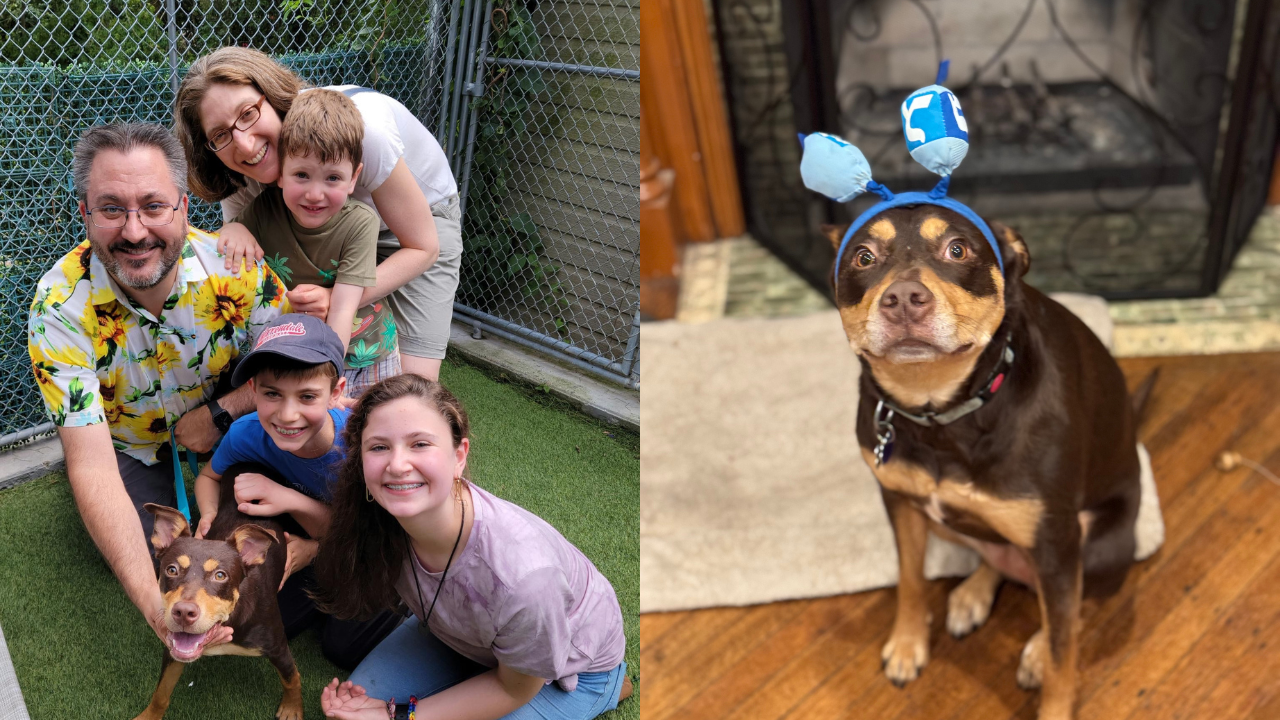
We have now had Ariel, an excitable rescue dog with the sweetest temperament, for about three years. Her play, love, and snuggles light up our house and lower the emotional temperature when things are intense. While appreciative, I was not surprised by these positive effects, but what I wasn’t expecting was the role our pup plays as a social facilitator.
We have met many pet-owners walking the same route at the same time of day as us, have struck up countless chats at the dog park, and consistently talk to neighbors who come over to say hi to, pet, and even train our dog. Every Sunday during our morning dog walk, my husband and I stop at our local coffee shop (which allows dogs) and speak with the barista who knows our names and our regular orders. My child has bonded with others over their love of dogs. In challenging social situations or when meeting new people, the ice has been broken frequently through sharing pictures of Ariel and inquiring about others’ pets. Our dog has brought about conversations and relationships that would not have happened without her.
A significant amount of research shows that pets aid in building and sustaining relationships human-to-human. A study out of the University of Western Australia and the Harvard T.H. Chan School of Public Health, which surveyed nearly 2,700 people, found that pet ownership was the third most reported way respondents met others in their neighborhoods and that pet owners were “60% more likely than non–pet owners to get to know people in their neighborhoods they hadn’t known before.” Another study by Hart, Hart, and Bergin looked at the interactions of wheelchair users with strangers before and after obtaining service dogs. Subjects reported “significantly higher numbers of social greetings from adults and children” when they had the dogs than when they did not.
Pet ownership is also highly associated with increased levels of social capital. Social capital is the benefits we receive from our connections with others. This is what we refer to when we say things like, “It’s not what you know but who you know.” This advantage is not limited to dog-ownership. A study featured in the journal SSM – Population Health looked at four cities, three in the U.S. and one in Australia, and found that 27% of participants who owned animals other than dogs got to know their neighbors through their pets. This included pets prompting first meetings, being topics of conversation, or children wanting to meet these different types of pets.
Pets are amazing social catalysts and can be used to help spark and sustain relationships between people with and without disabilities. Families of people with disabilities, individuals living independently, and group homes should all consider pet ownership. Not only do pets foster connection through shared interests and commonalities with other animal lovers, but they also help with social, emotional skills and developing empathy and compassion. If pet ownership is not a possibility, one may be able to reap some of its social benefits through work or volunteer opportunities that both involve animals and interactions with people, such as dog walking, taking animals to the park, or working at a pet store.
In the trainings we offer at Pathways to Friendship, a collaborative initiative on social inclusion between The Arc of Massachusetts and the Department of Developmental Services (DDS), we often talk about a “Formula for Friendship.” This formula is having shared interests and frequent, meaningful interactions. Pet ownership is another great avenue through which we can implement this formula. After all, a dog may indeed be “man’s best friend” because she facilitates relationships with his neighbors!
You can learn more about Pathways to Friendship and supporting friendships between people with and without disabilities at thearcofmass.org/friendship
Sources:
- https://www.health.harvard.edu/blog/pets-can-help-their-humans-create-friendships-find-social-support-201505067981
- https://www.tandfonline.com/doi/abs/10.2752/089279388787058696 –
- https://www.sciencedirect.com/science/article/pii/S2352827317300344?via%3Dihub;
- https://www.sciencedirect.com/science/article/abs/pii/S0277953605000535?via%3Dihub